Salvador: At the Heart of Afro-Brazilian Heritage
Reflections from a research stay by Mariama de Brito Henn
What does it mean to encounter heritage not only in museums, but in waterfalls, processions, public parks, and everyday urban life? During a recent research trip to Salvador da Bahia, Mariama de Brito Henn reflects on the city as a living archive of Afro-Brazilian culture — a place where spirituality, history, and public space are deeply intertwined.
Salvador is not only the first capital of Brazil – it is often described as the country’s Black heart. Bahia, and Salvador in particular, remains a living, beating center of Afro-Brazilian culture and heritage. Black Brazilian heritage is present throughout the city: in religious festivities, museums, streets, and public spaces.
Altars and places of worship dedicated to the Orishas* can be found in public parks such as Parque São Bartolomeu, where several waterfalls are devoted to different deities, most notably Oxum. Here, nature, spirituality, and collective memory merge in powerful ways.
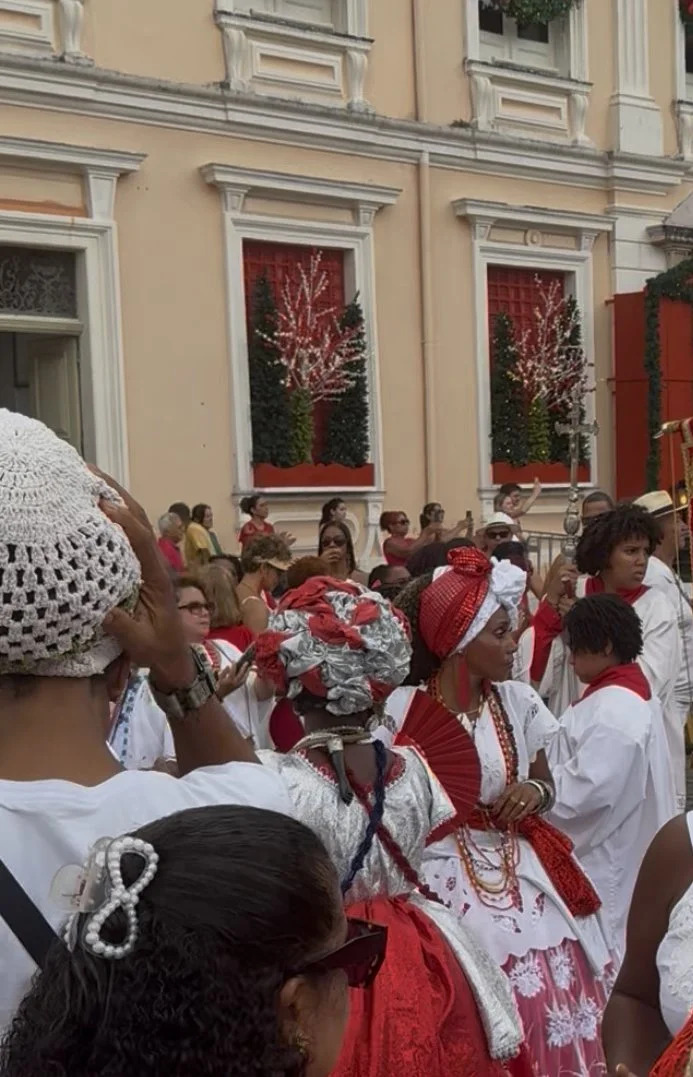
The presence of Yansã, the goddess of wind and storms, becomes especially visible during the festival of the Catholic saint Barbara. Both figures share the color red, and their joint celebration is not contradictory. Christianity and Candomblé have coexisted – sometimes side by side, sometimes intertwined for more than a century. On December 4, their connections become particularly tangible: the procession for Yansã moves through the historic city center and traditionally concludes at Salvador’s first fire station, as Yansã is also regarded as the patron saint of the city’s firefighters.
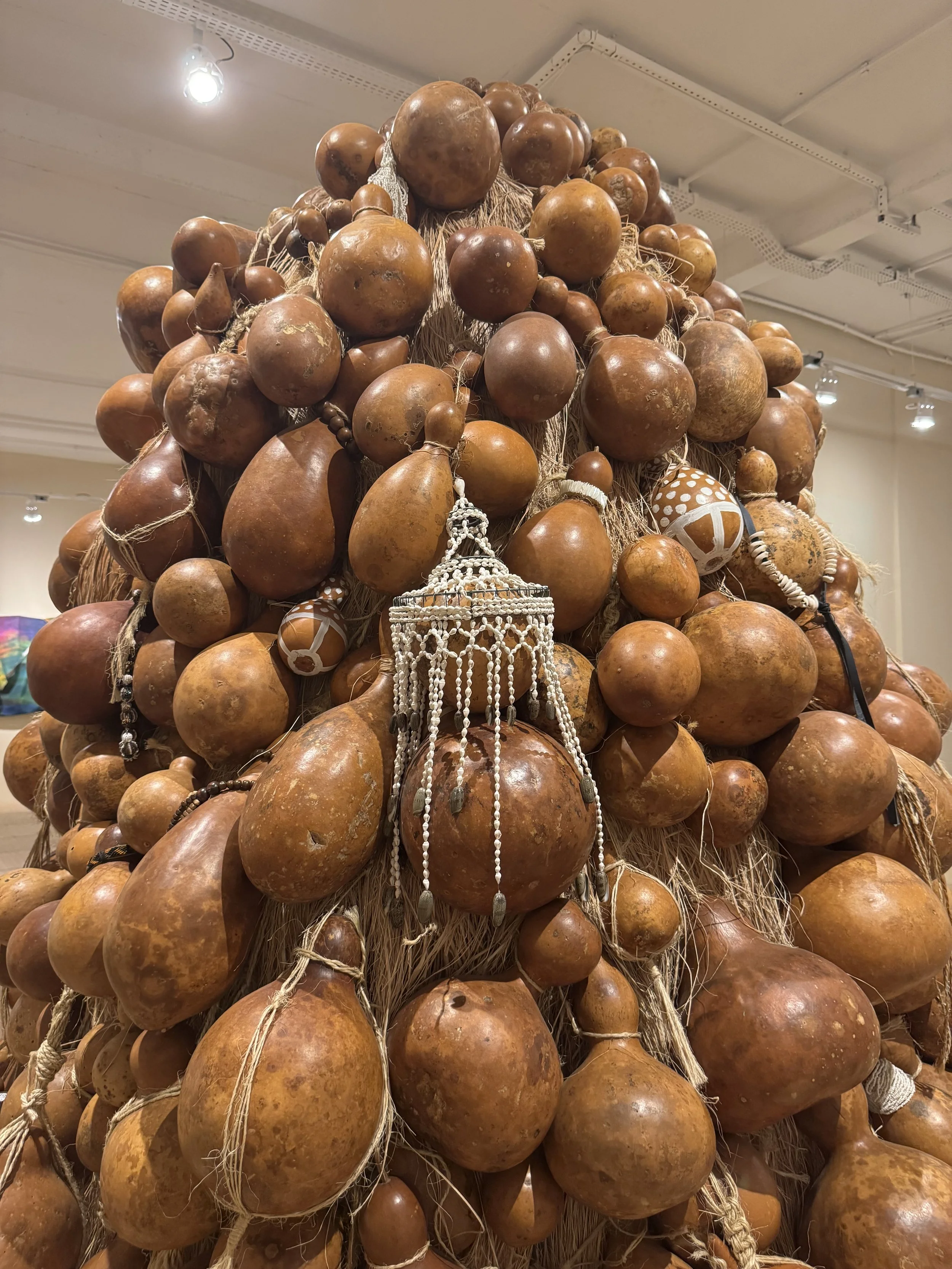
Salvador is also home to several museums dedicated to Black Brazilian art. In these spaces, the connections between contemporary artistic practice and Afro-spiritual aesthetics are unmistakable, as seen, for example, in the works of Mônica Ventura.
*Orishas (also spelled Orixás in Portuguese, Òrìṣà in Yoruba) are divine beings or spiritual forces in the Yoruba religion of West Africa. They originate in the religious traditions of the Yoruba people (in present-day Nigeria, Benin, and Togo) and were brought to the Americas through the transatlantic slave trade.