
Workshop on Intangible Cultural Heritage Conservation at the Weltmuseum Wien
How can museums care for objects that hold spiritual significance, and what does it mean to engage with them in a secular museum space? These questions shaped a workshop held in the OpenSpace at the Weltmuseum Wien, led by Martina Amort and Renée Riedler.
The workshop formed part of a seminar for conservation students at the Institute of Conservation-Restoration at the University of Applied Arts Vienna, led by Martina Amort and Tanushree Gupta. Manvi Seth, Head of the Department of Museology at the National Museum Institute in New Delhi, and her colleagues also joined the discussions.
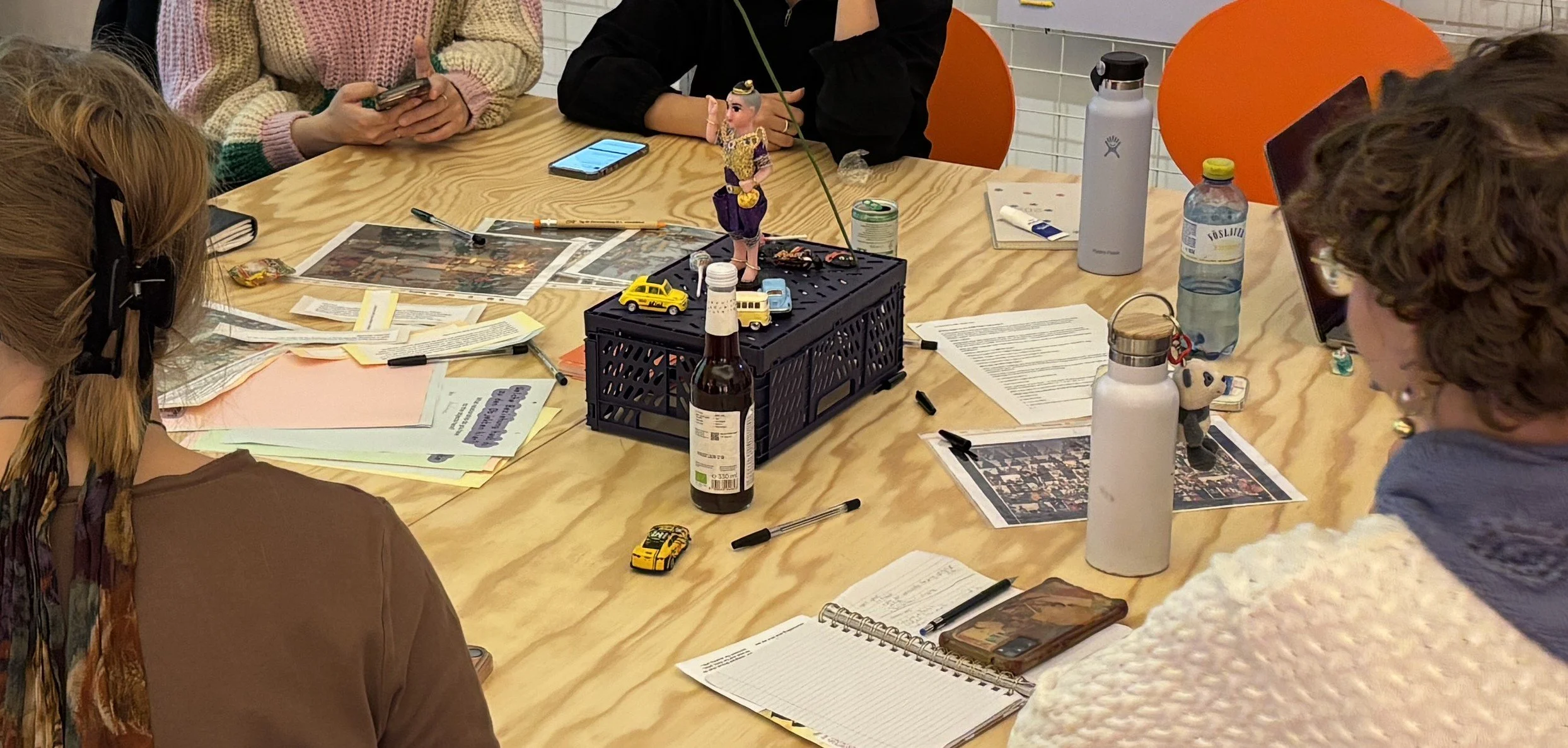
The spirit child Guman Thong (a gift from Alisa Santikarn), toys borrowed from Martina Amort’s two children, and other consumable offerings.
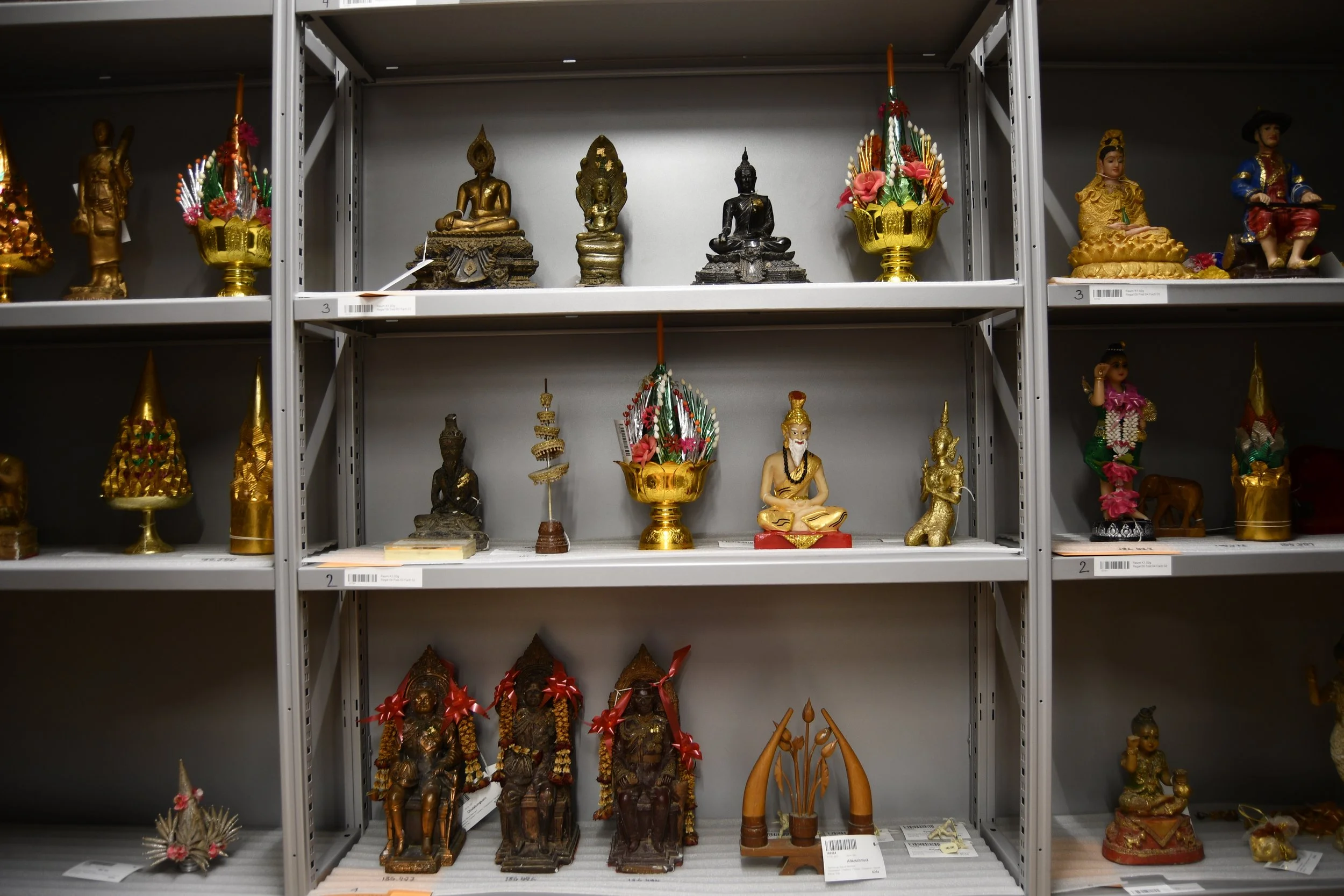
The workshop focused on a Thai altar ensemble in the collection of the Weltmuseum Wien. Its presence in the museum raises questions about appropriate documentation, storage, and display, as well as the responsibilities involved in caring for cultural heritage with spiritual significance. Particular attention was given to the museum as a space for community participation and engagement.
The students developed a range of recommendations for the altar’s future care and presentation. These included considering whether it could serve a broader range of users, allowing individuals to establish their own relationships with the material and their belief systems. Other suggestions emphasized the importance of consulting the family of the deceased spiritual medium or members of the Thai diaspora community.
The students also proposed a digital approach to display that could make the altar accessible to a wider audience while reducing some of the maintenance and care requirements associated with a physical installation. This option also raised questions about how to respond if the altar were to be enlivened again.
Rather than producing a single, definitive solution, the workshop highlighted the complexity of caring for objects whose significance extends beyond their material form. By bringing different perspectives into conversation, it opened up possibilities for thinking about conservation, community involvement, and the role of museums in engaging with intangible cultural heritage.