Far from Home: Senegalese Objects in the Weltmuseum’s Storage Rooms
by Cécile Mendy
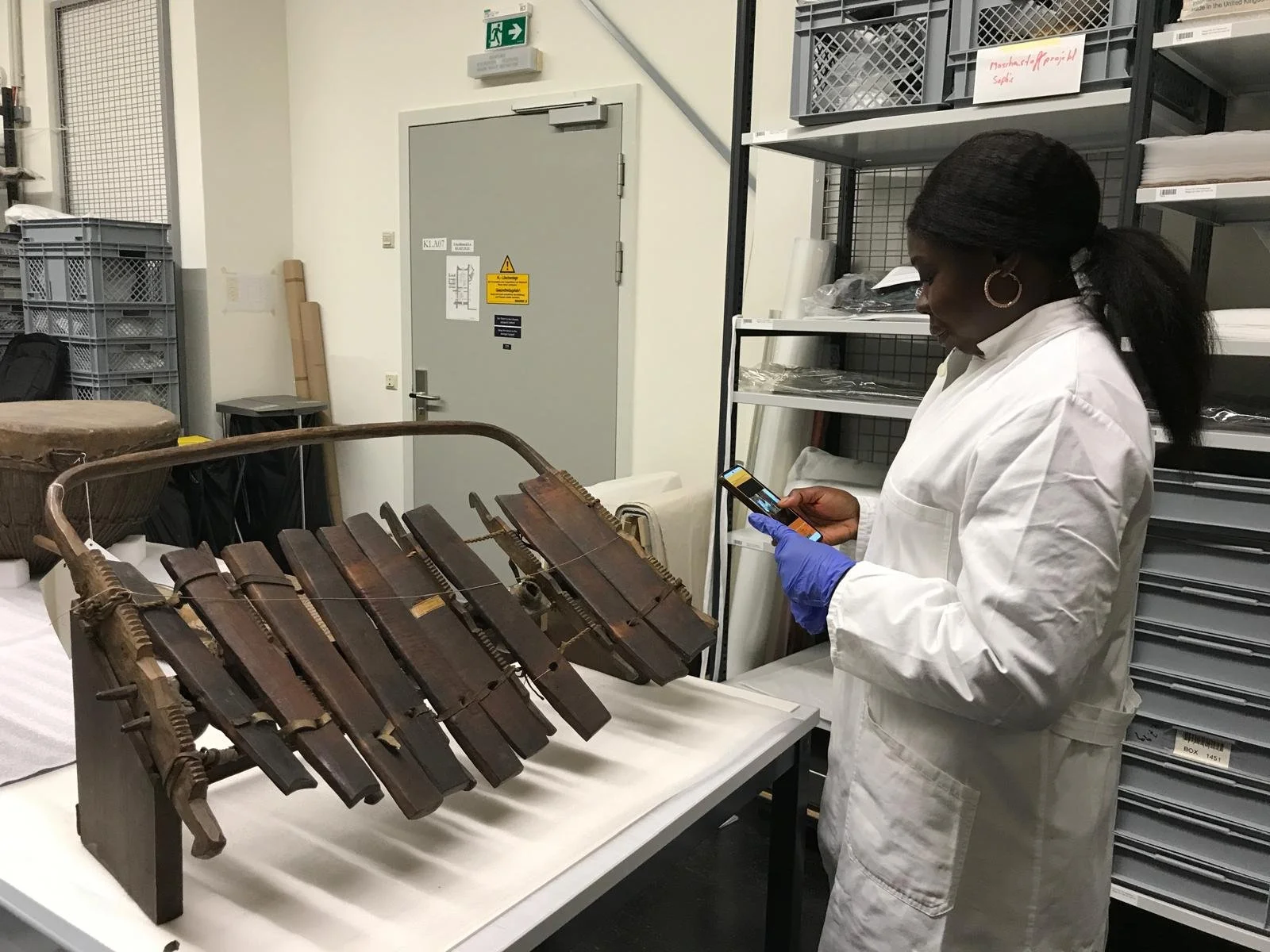
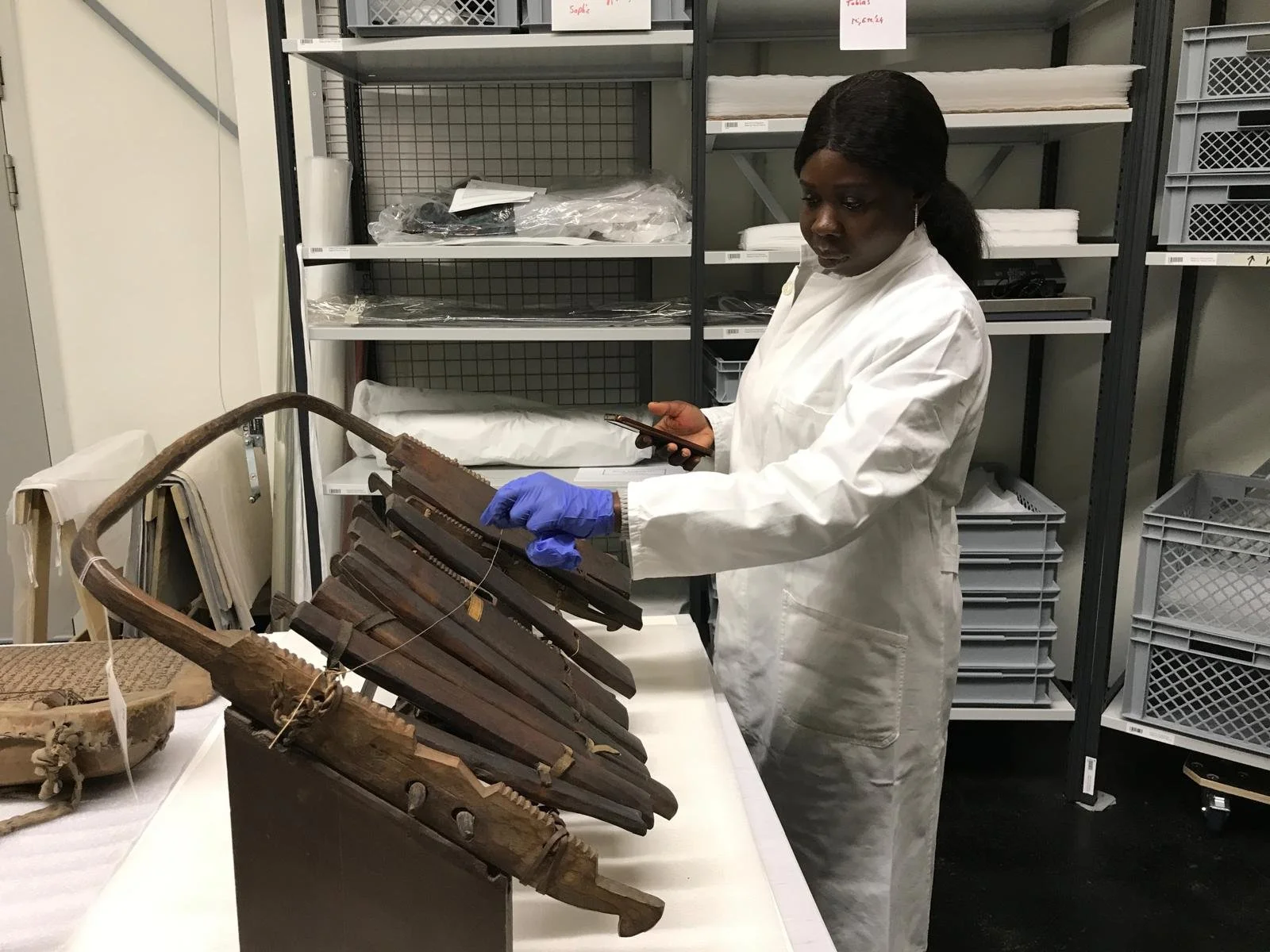
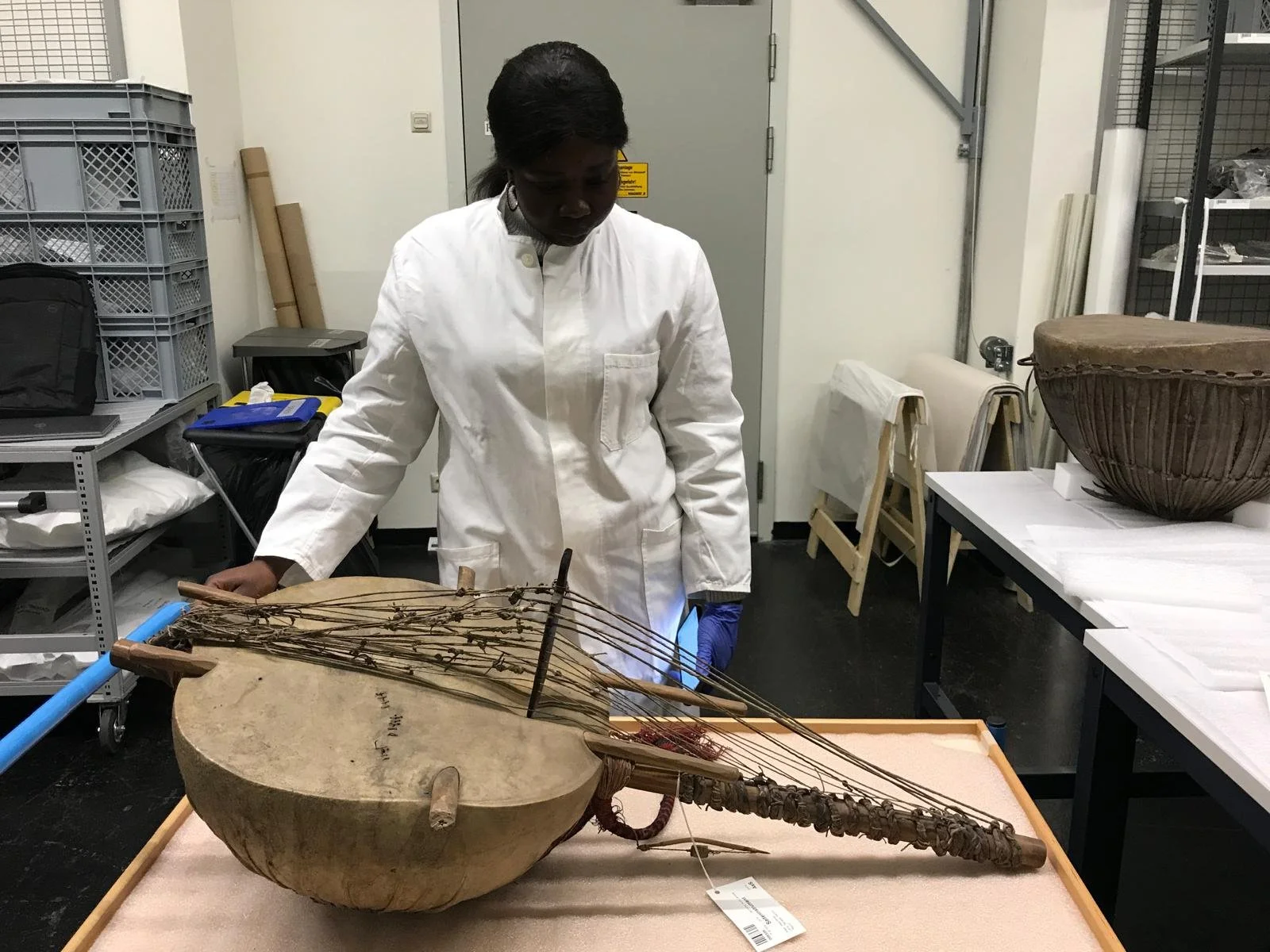
Entering the storage rooms of the Weltmuseum was a privilege for me, as this is a particular space within museums that is not always accessible to everyone. A colleague at the Weltmuseum, knowing that I am from Senegal, told me about a collection of objects from Senegal and The Gambia and, with the authorization of her supervisor, allowed me to access the storage area.
There, I discovered musical instruments such as balafons and a kora, as well as metal objects such as ornaments, daggers, and spears. Far from their countries of origin, where they were created and used, these objects are now preserved in the museum’s storage rooms.
According to the information provided by the museum, some of these objects were acquired in the context of the 1874 Universal Exhibition, while others entered the collections through ethnologists, geographers, missionaries, or donations between cultural institutions.
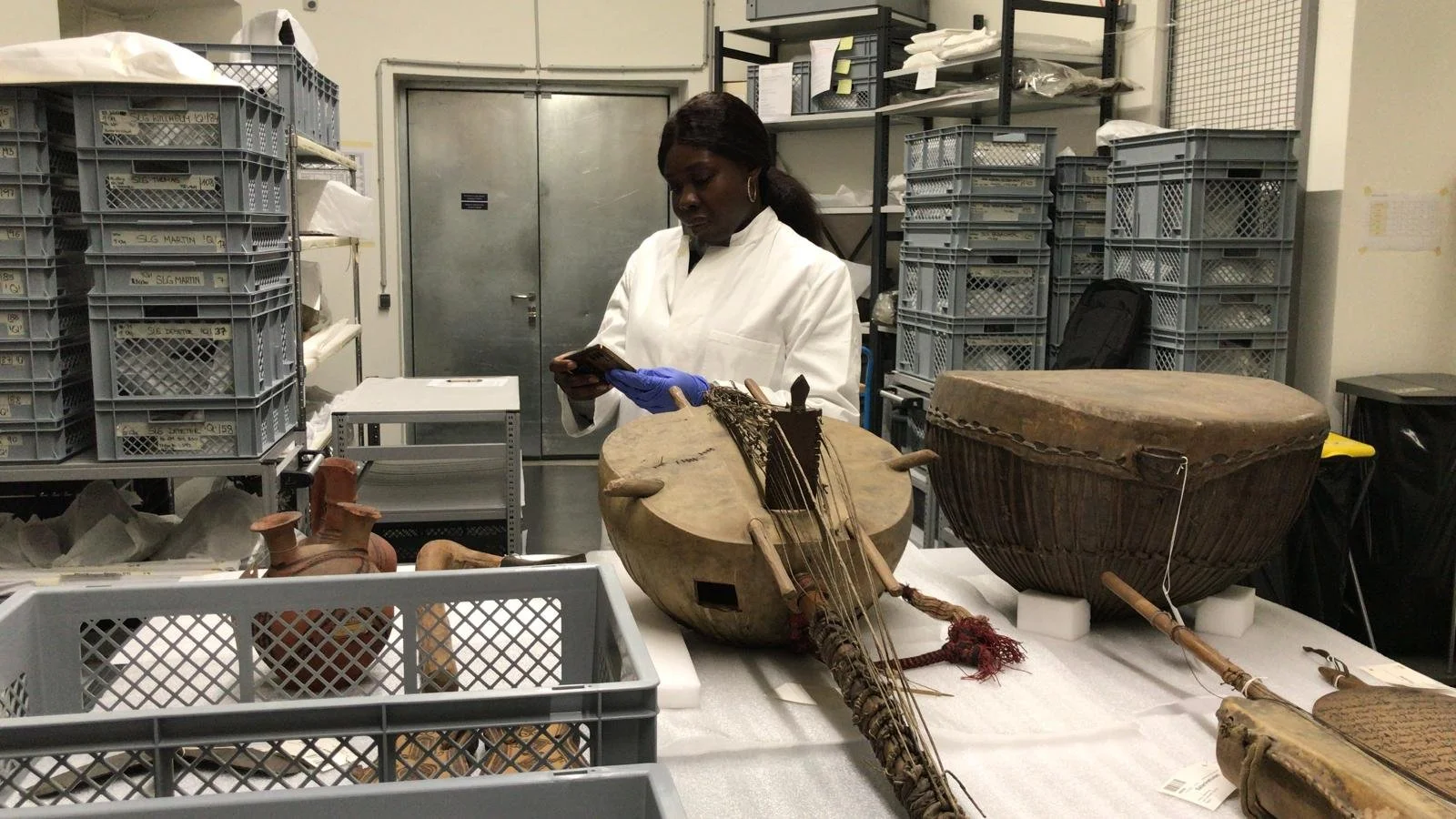
Standing in this space, several questions came to my mind: How did these objects come to be in these museums? Under what circumstances were they collected or acquired? Are the countries of origin aware that objects from their territories are preserved in European museums? Have these objects ever been exhibited, or have they remained in storage since their arrival at the museum?
Faced with these questions, my way of seeing these objects as material witnesses of a culture has expanded. I also perceive them as traces of a long history of circulation, collection, and preservation that deserves to be questioned.
This discovery led to the idea of a collaboration between the Weltmuseum and the CRDS in Senegal, with which the GloCo project, in which I am conducting my PhD research, had already collaborated in 2025. This collaboration aims to further document these objects and contribute to their valorization, particularly through virtual and physical exhibitions in Senegal.
Beyond the study and documentation of the collection, this collaboration could offer an opportunity to reconnect these objects with audiences in Senegal and to bring new perspectives to their history, meaning, and place within the museum.