Conference Participation: Alisa Santikarn and Anna-Marie Kroupová at the Association for Art History’s Annual Conference 2026
At the 2026 Annual Conference of the Association for Art History, held from 8–10 April 2026 at the University of Cambridge, two members of the Heritage Studies Vienna team presented their current research.
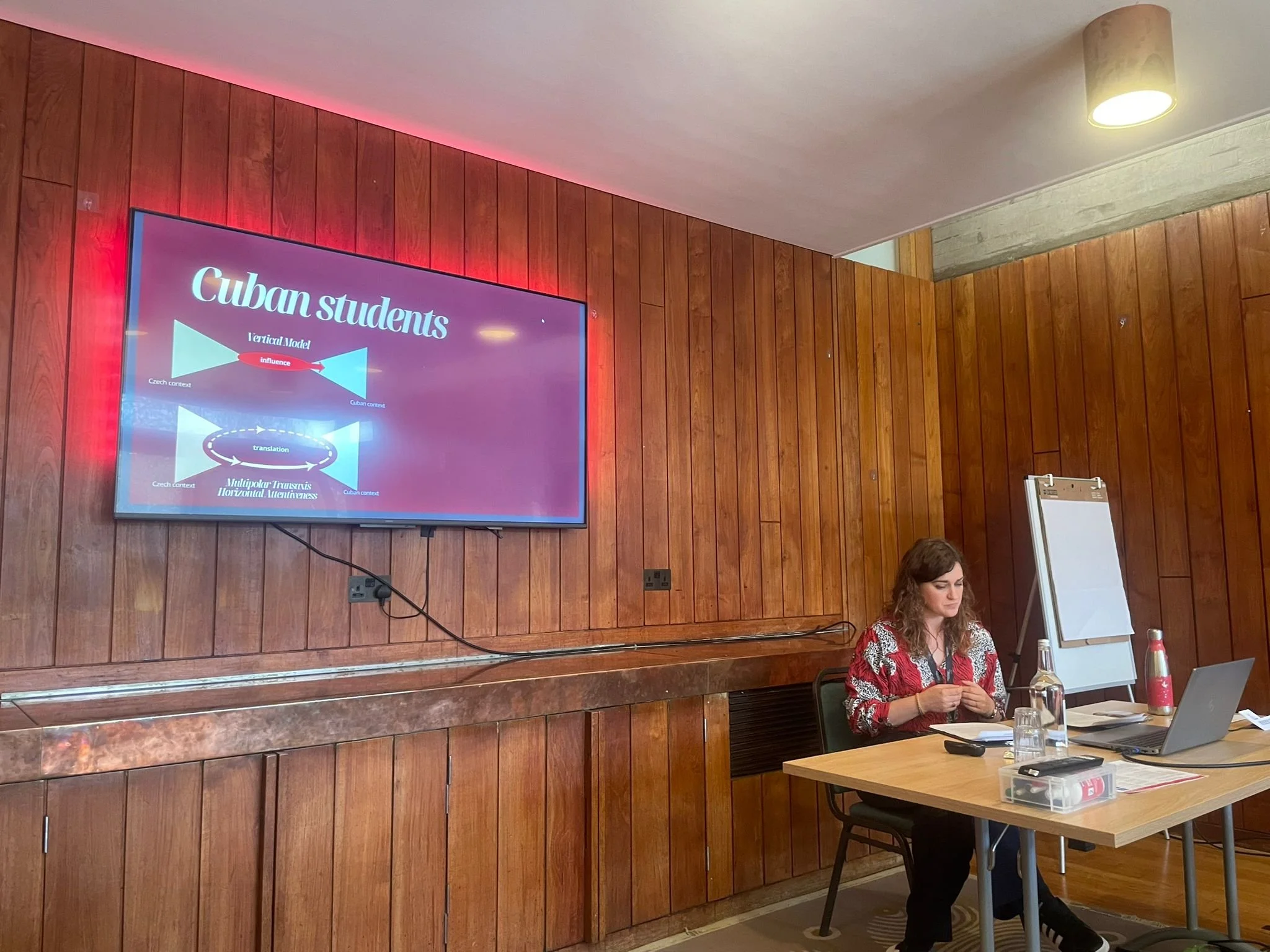
Anna-Marie Kroupová delivered the presentation “Piotrowski Goes Global: From Horizontal Art History to Horizontal Attentiveness” in the session Horizontal Art History in Global Context: East Central Europe in the Present. Building on Piotr Piotrowski’s concept of “horizontal art history,” she proposed “horizontal attentiveness” as an epistemological stance. Drawing on archival research and interviews, she discussed student mobility between the Global South and East Central Europe during the late Cold War, focusing on scholarship holders at the Prague Academy of Fine Arts. Her contribution emphasized analysing different contexts with equal intensity while acknowledging historical asymmetries between actors, institutions, and power structures. By combining Piotrowski’s framework with decolonial theory and mobility studies, she proposed an alternative art-historical cartography that challenges dominant Western narratives and highlights East–South relations.
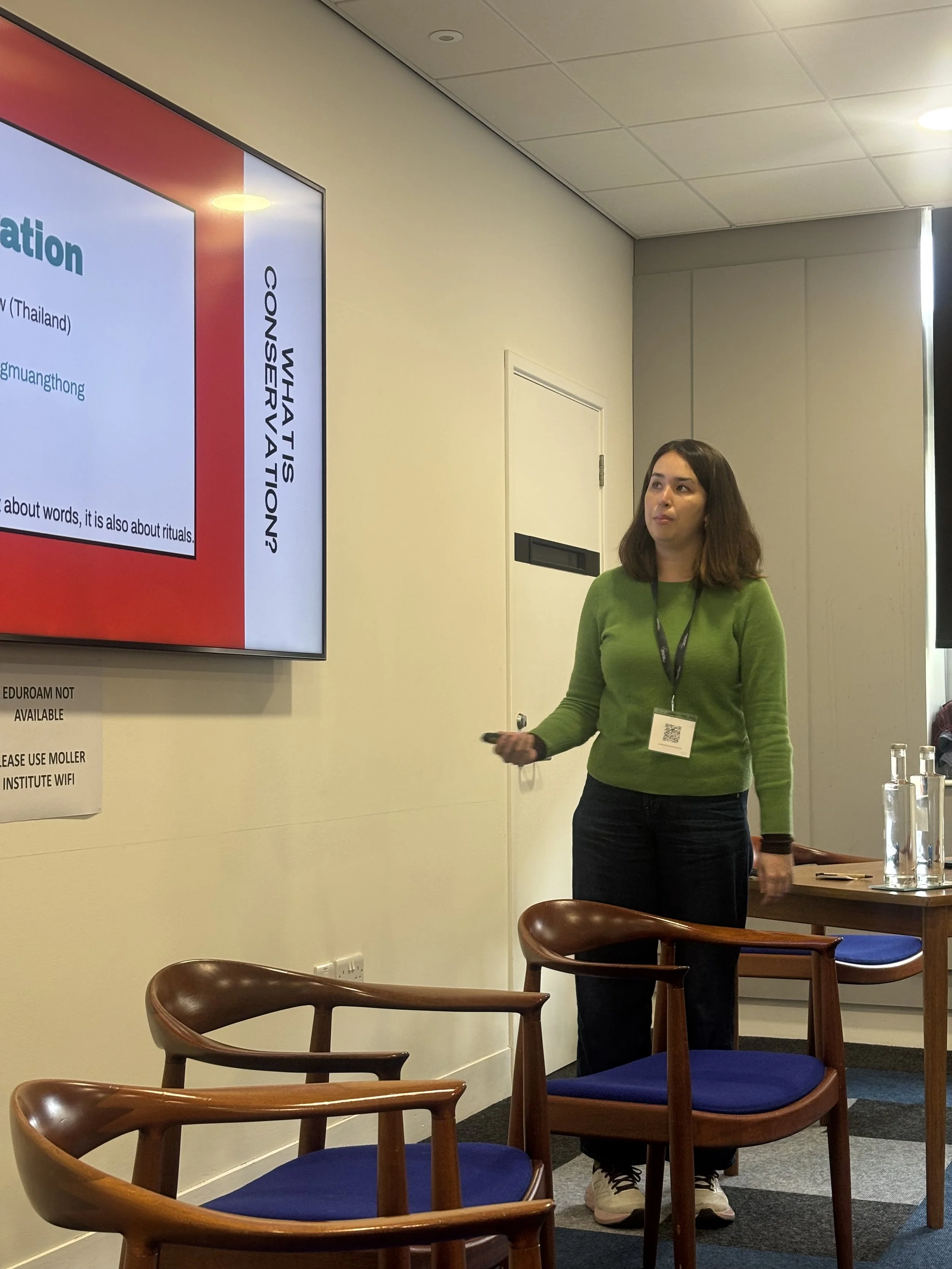
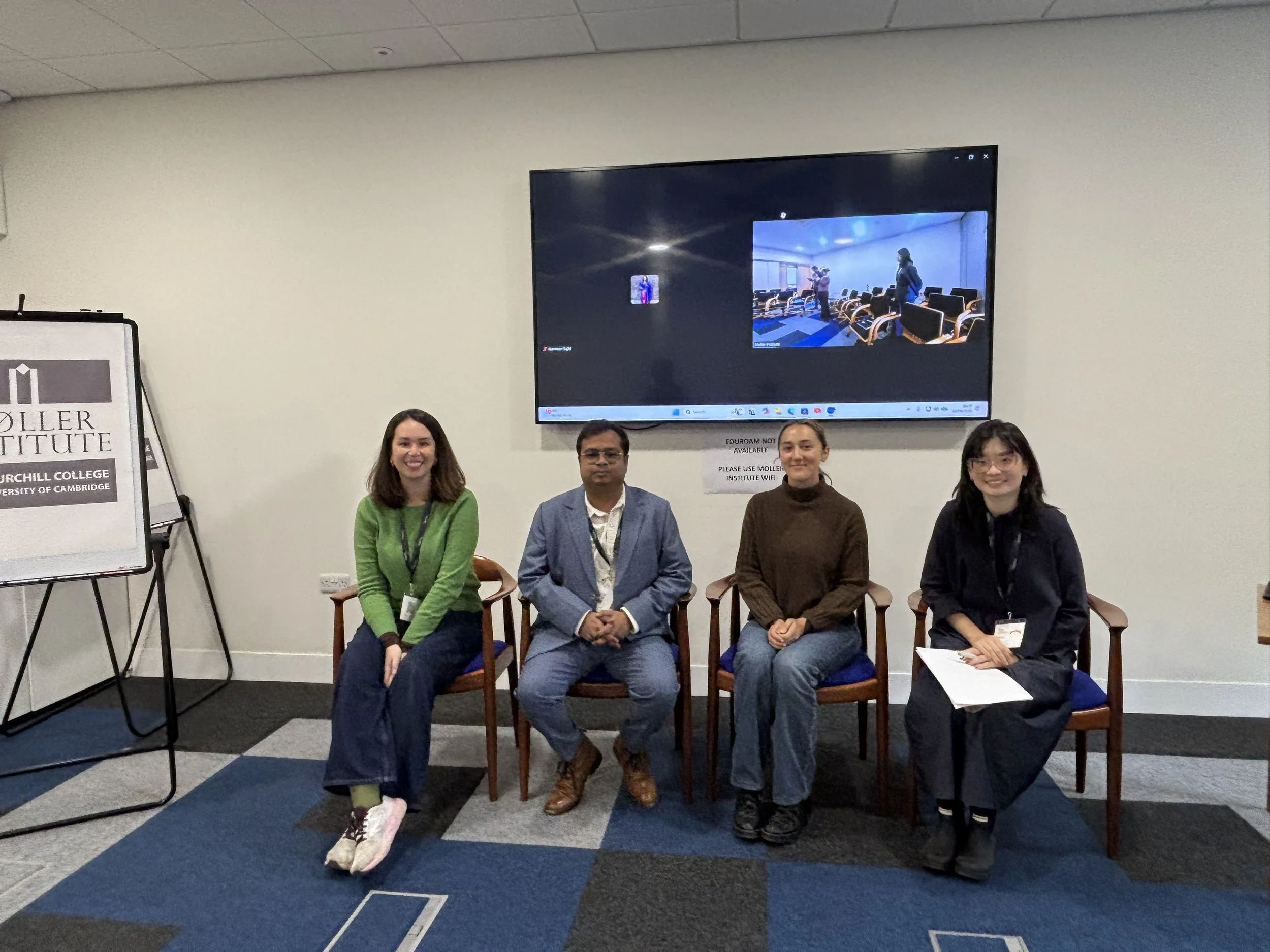
Alisa Santikarn presented “Rotten Wood, Concrete Shrine, Sacred Forest: Preserving the Boo Da Spirit in Northeast Thailand” in the session Jungle Ruins and Sacred Forests: Ecologies of the Forgotten Monument. Based on field visits to thirteen shrines across four provinces in Northeast Thailand, interviews with caretakers, and participation in a ritual in April 2025, her presentation examined the Saan Boo Da shrine dedicated to a protective ancestral spirit. She discussed practices of curated decay, where older wooden shrine structures are left to deteriorate alongside newer concrete replacements, and considered how belief, material structures, and sacred forest environments are maintained through local systems of care. Framing the shrine as an analogy for a museum, she highlighted the role of the caretaker (Jum) as responsible for both material and immaterial forms of preservation, negotiating relationships among environment, community, and ancestral presence over time.
Both presentations contributed to broader discussions on global art history, heritage, and conservation, highlighting transregional perspectives and interdisciplinary approaches.