
Research by Alisa Santikarn Contributes to New Acquisition at the Museum of Archaeology and Anthropology
Research by Alisa Santikarn has contributed to the acquisition of a Pakam rope from the Kui Ajiang community in Thailand by the Museum of Archaeology and Anthropology (MAA) at the University of Cambridge.
The acquisition was made possible through a grant from the MAA and builds on Alisa's doctoral research and forthcoming book. The Pakam rope was one of the key case studies in her research, which discusses the cultural significance of material practices, local knowledge, and heritage within the Kui Ajiang community. Its inclusion in the museum's collection contributes to increasing the international visibility of the community and its cultural heritage.
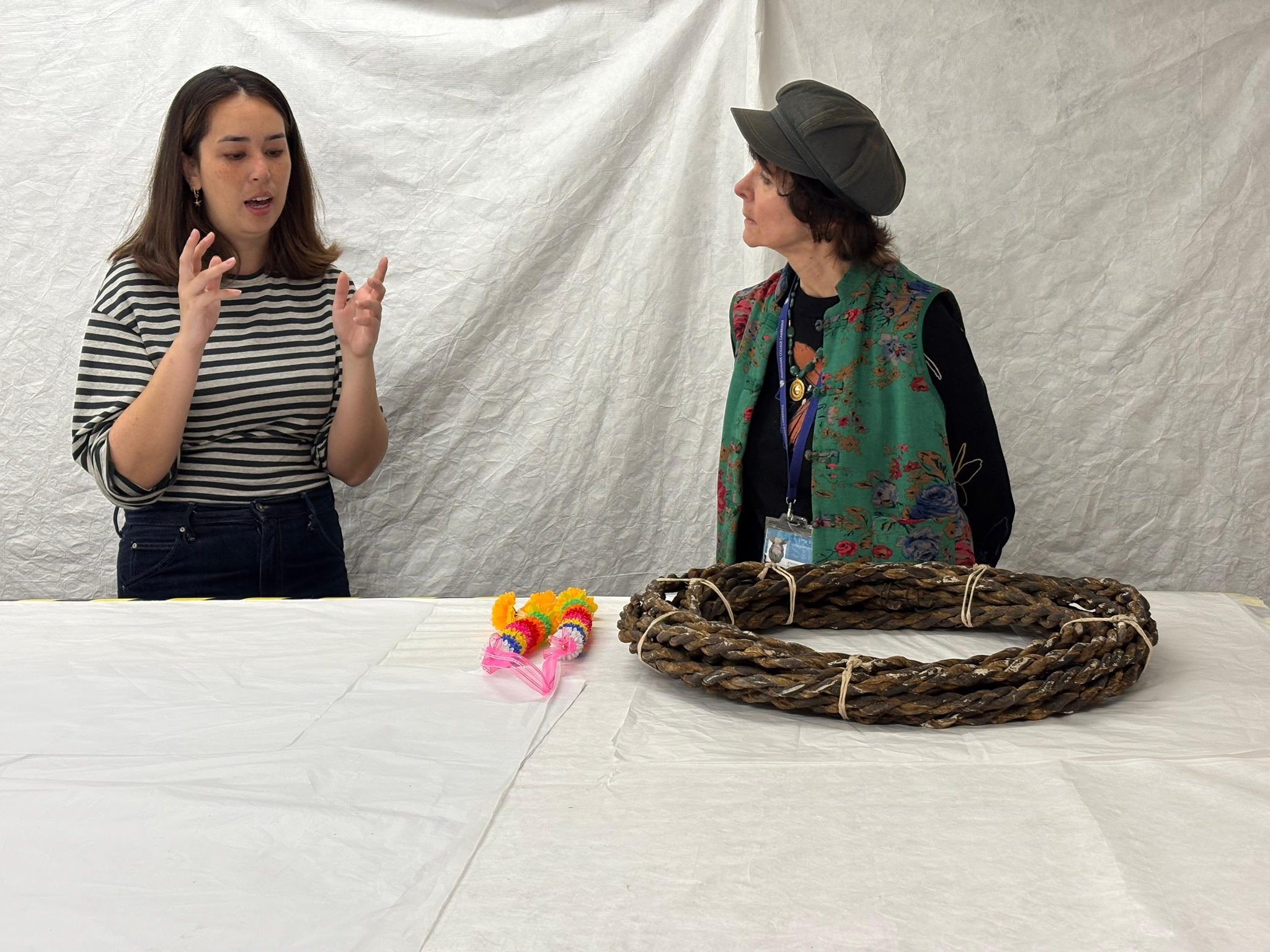
Recently, Alisa met with writer and Royal Literary Fellow Ruth Padel at Magdalene College, Cambridge, to discuss the rope and its journey into the museum's collection. The meeting provided an opportunity to reflect on the role of museums in preserving, interpreting, and sharing community knowledge across cultural and geographical boundaries.
Alongside the acquisition, Alisa curated a digital exhibition that highlights the history, meanings, and contemporary significance of the Pakam rope and its connections to Kui Ajiang elephant-catching traditions. The rope is also featured in the museum's online collections database, making it accessible to audiences around the world.
If you would like to learn more about the Pakam rope and its cultural significance, you can head to the GloCo Dictionary entry on Pakam, written by Alisa Santikarn. The entry introduces the history, uses, and meanings of the rope within the Kui Ajiang community and highlights its importance as a form of local knowledge and cultural heritage.