From Vietnam to Prague – and Back Again: Cultural Diplomacy, Soft Power, and Solidarity in a Militarized World
by Anna-Marie Kroupová
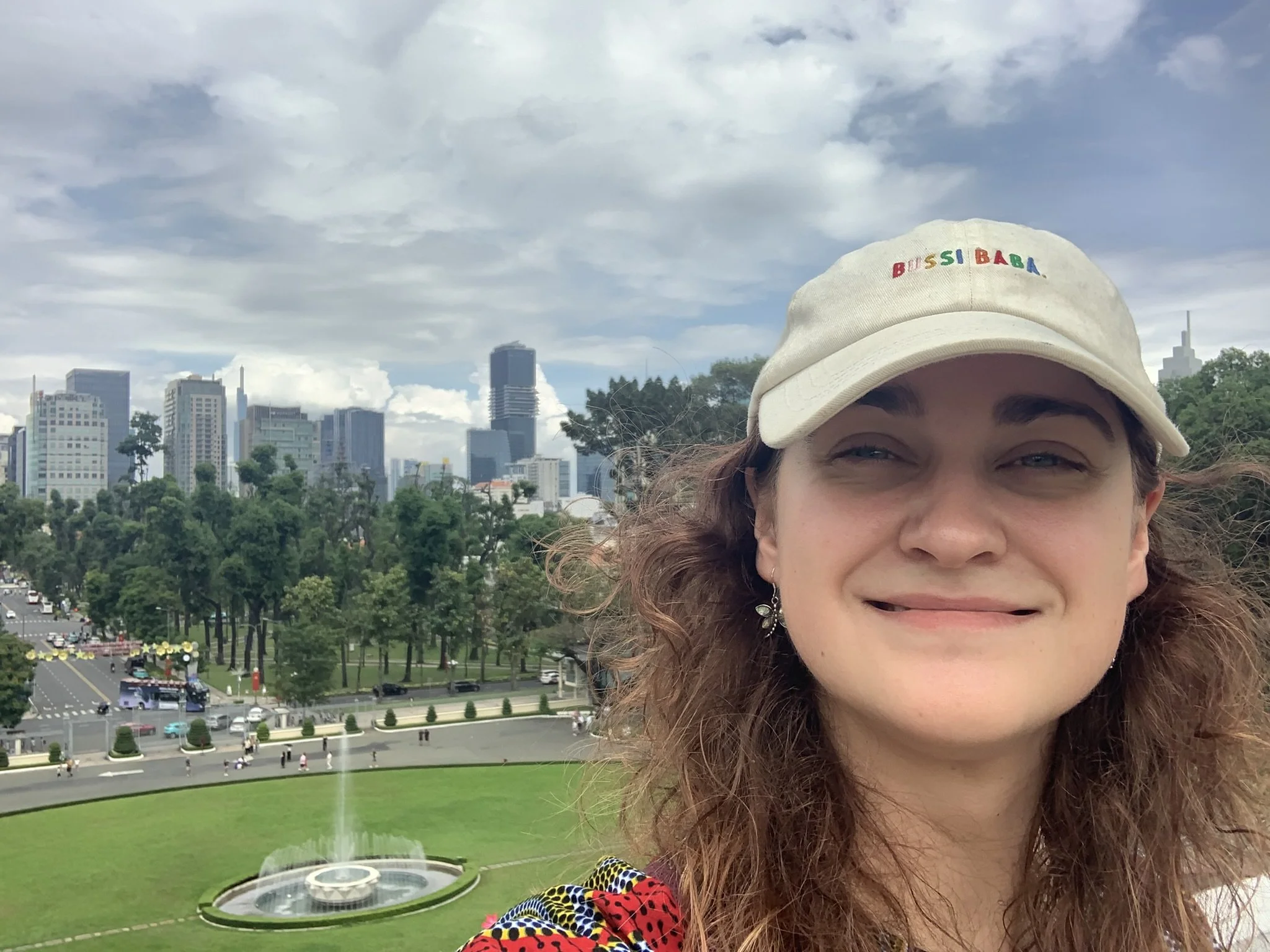
What does it mean to research past connections when geopolitical developments suddenly imbue them with new meaning? In my PhD project, I examine the global entanglements of the Academy of Fine Arts in Prague during the late socialist period. This field of research is inherently shaped by questions of soft power, cultural diplomacy and, above all, dialogue between people and cultures. In February and March of this year, my research took me to Vietnam, where I had planned to conduct several oral history interviews with former art students who had studied in Prague. However, after only a few days in Southeast Asia, I was confronted with current political events: the attack on Iran revealed the consequences of failed diplomatic negotiations and the turn towards hard power and military escalation with brutal clarity.
Researching in a Time of Escalation
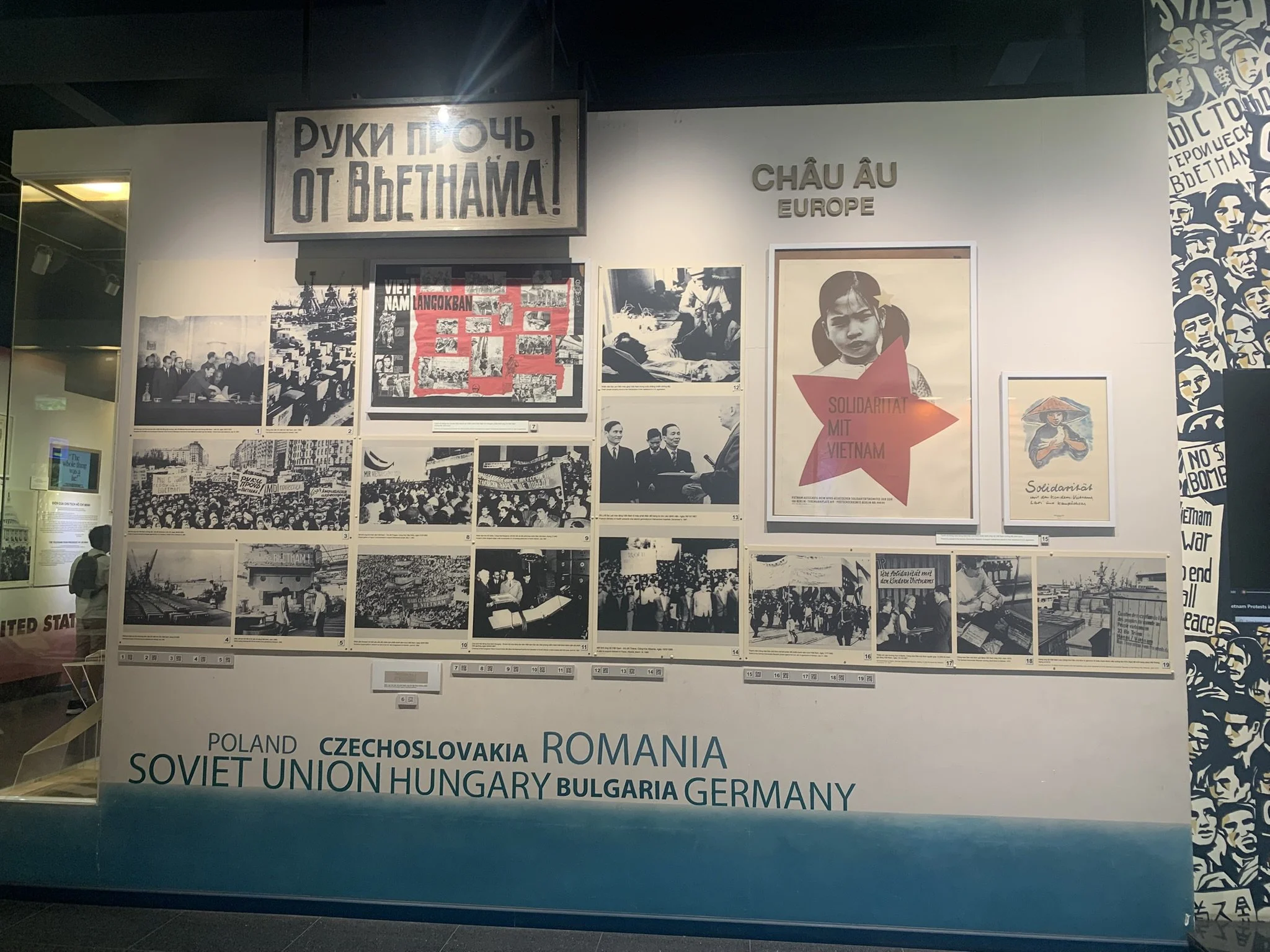
In the midst of global political upheaval, it was unsettling to find myself precisely in Vietnam, a country where the trauma of US military intervention is still very much present and elevated to the central historical narrative in almost every state museum. These developments heightened my awareness of a concept that lies at the heart of my research: solidarity. This principle played a central role within the socialist bloc at the time. Under the banner of solidarity, many students moved through the socialist world on state scholarships, including those who studied at the Prague Academy between 1969 and 1989. The mechanisms behind global socialism, or socialist internationalism, which I had previously encountered more as scholarly concepts, suddenly became strikingly concrete to me.
Alongside the concept of solidarity, many visual forms also felt unexpectedly familiar, such as the omnipresent red flags bearing the hammer and sickle, political slogans celebrating the Communist Party, and countless public portraits of selected political leaders. I originally come from the Czech Republic, a post-socialist country, whereas Vietnam remains officially socialist. Yet these were images that I already knew from stories and photographs of my parents and grandparents, as well as Czech archives. These visual codes seemed, at least in part, to bridge the astonishing geographical – and chronological – distance between the two countries, creating certain moments of familiarity for me.
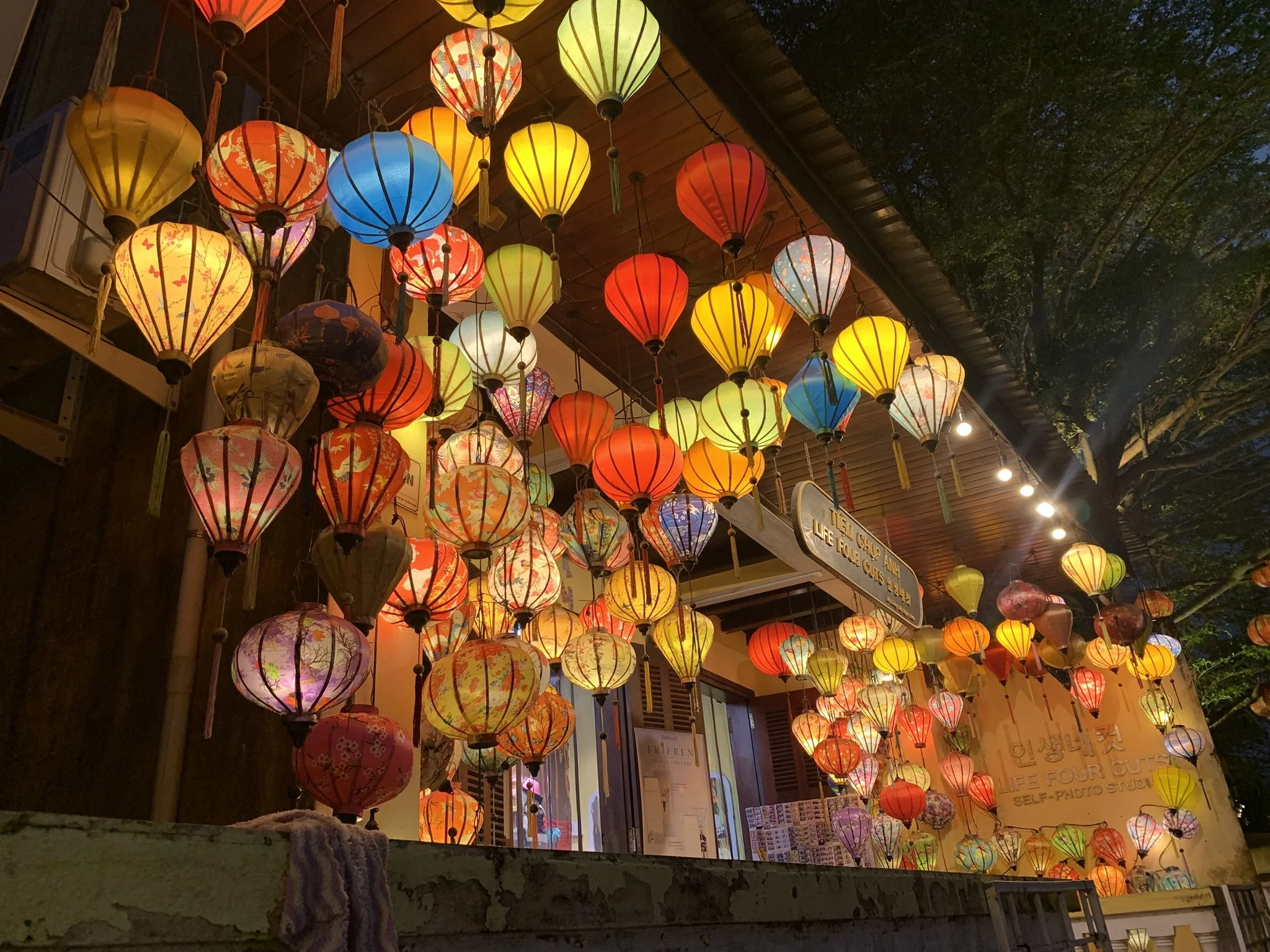
The omnipresent lanterns in front of a craft shop in Hội An.
Encounters Across Vietnam
For this research trip, I had originally planned to interview three former students who had returned from Prague and settled in different cities across Vietnam. This shaped my route through the country, taking me from Ho Chi Minh City in the south, via Da Nang in central Vietnam, to Hanoi in the north. The trip also required a high degree of adaptability and flexibility. During my second interview in Da Nang, for example, I learned about another extraordinary former Academy student who had not appeared in any Czech archives – and who happened to live in Ho Chi Minh City, the very place I had just travelled from. Suddenly, I had to reorganize my flights, accommodation, and translations. At the same time, this also revealed the continuing strength of the networks and friendships within the Vietnamese community that had once existed in Prague: one brief phone call was enough to arrange an additional, fourth interview with me.
The interviews themselves formed the core, and undoubtedly the highlights, of my stay. The former art students were genuinely thrilled to have the opportunity to speak in person with someone from the country where they had once studied, after such a long time. They still understood Czech, and some even spoke it at a good level, enabling us to communicate directly to some extent. During several hours of conversation, my interview partners told me about their years of study and showed me photographs of Prague its surroundings, as well as their artwork and other personal mementos from Czechoslovakia at that time. I found the accounts of the three students who had personally experienced the political changes of 1989 particularly fascinating: They described it as an abrupt and unexpected event that had brought great uncertainty into their lives.
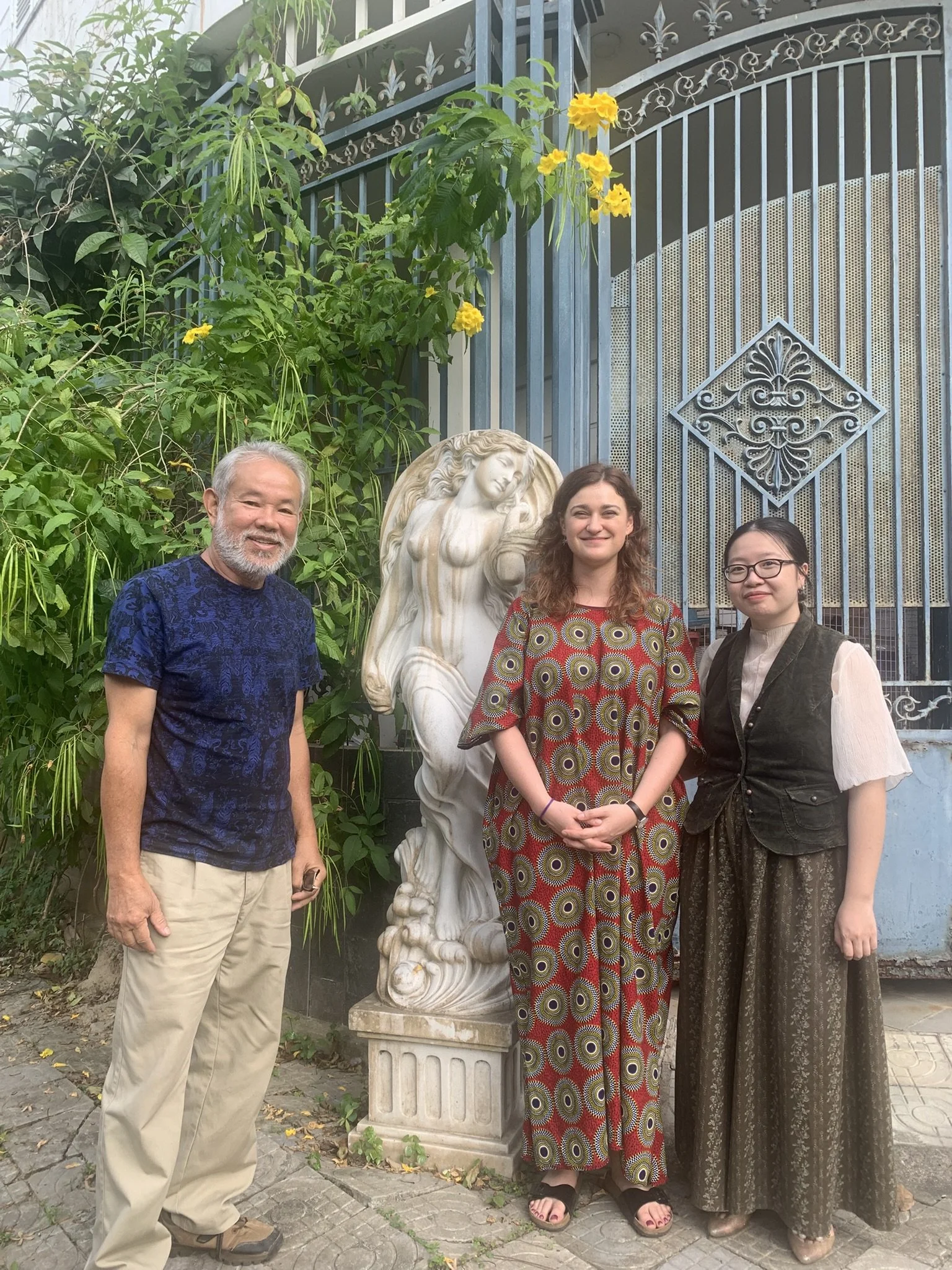
Anna-Marie with Nguyễn Hồng Nam at his home in Da Nang, with translator Thu Uyen Pham, in front of a marble sculpture by the artist.
Art, Memory, and Cultural Exchange
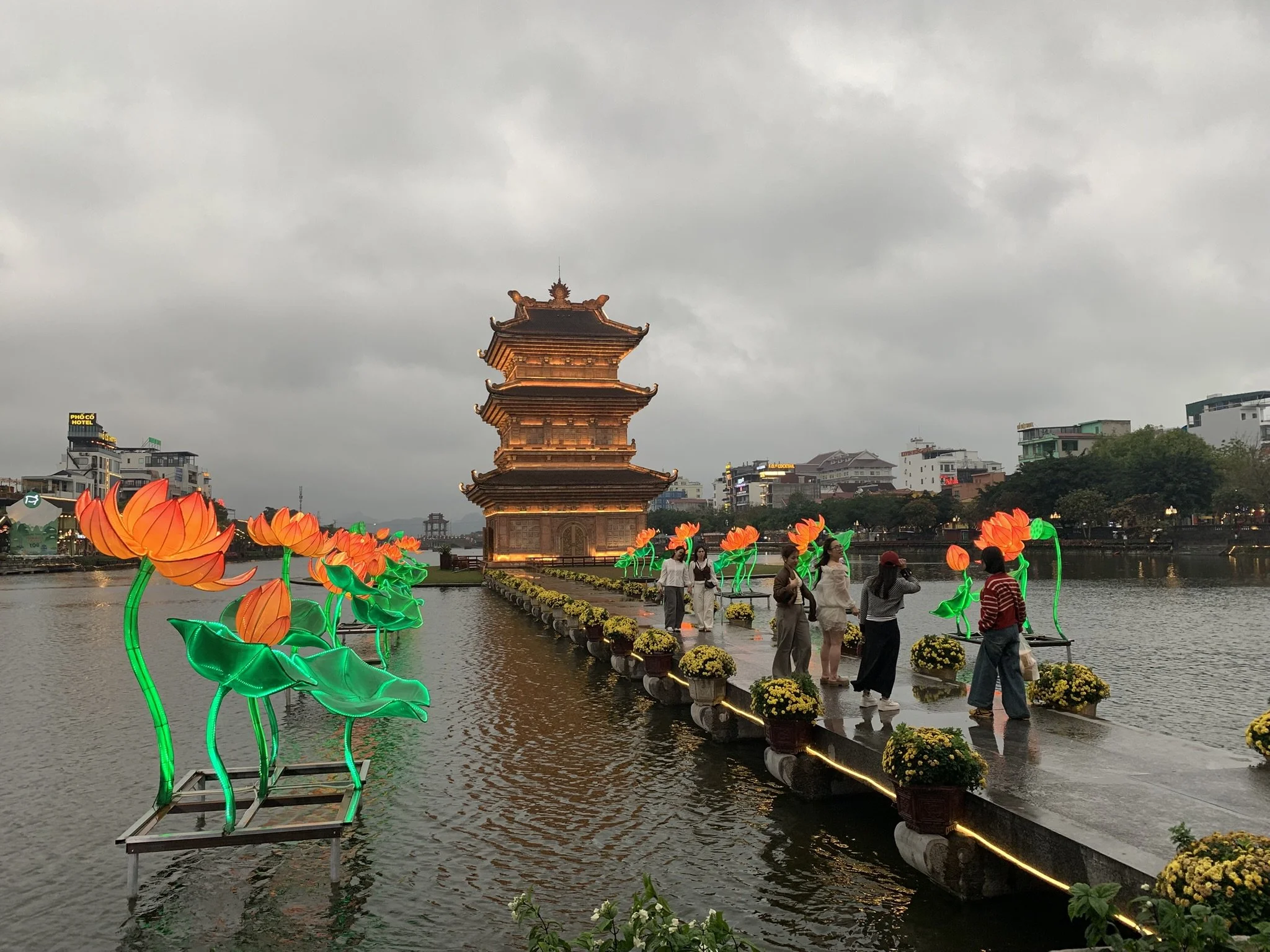
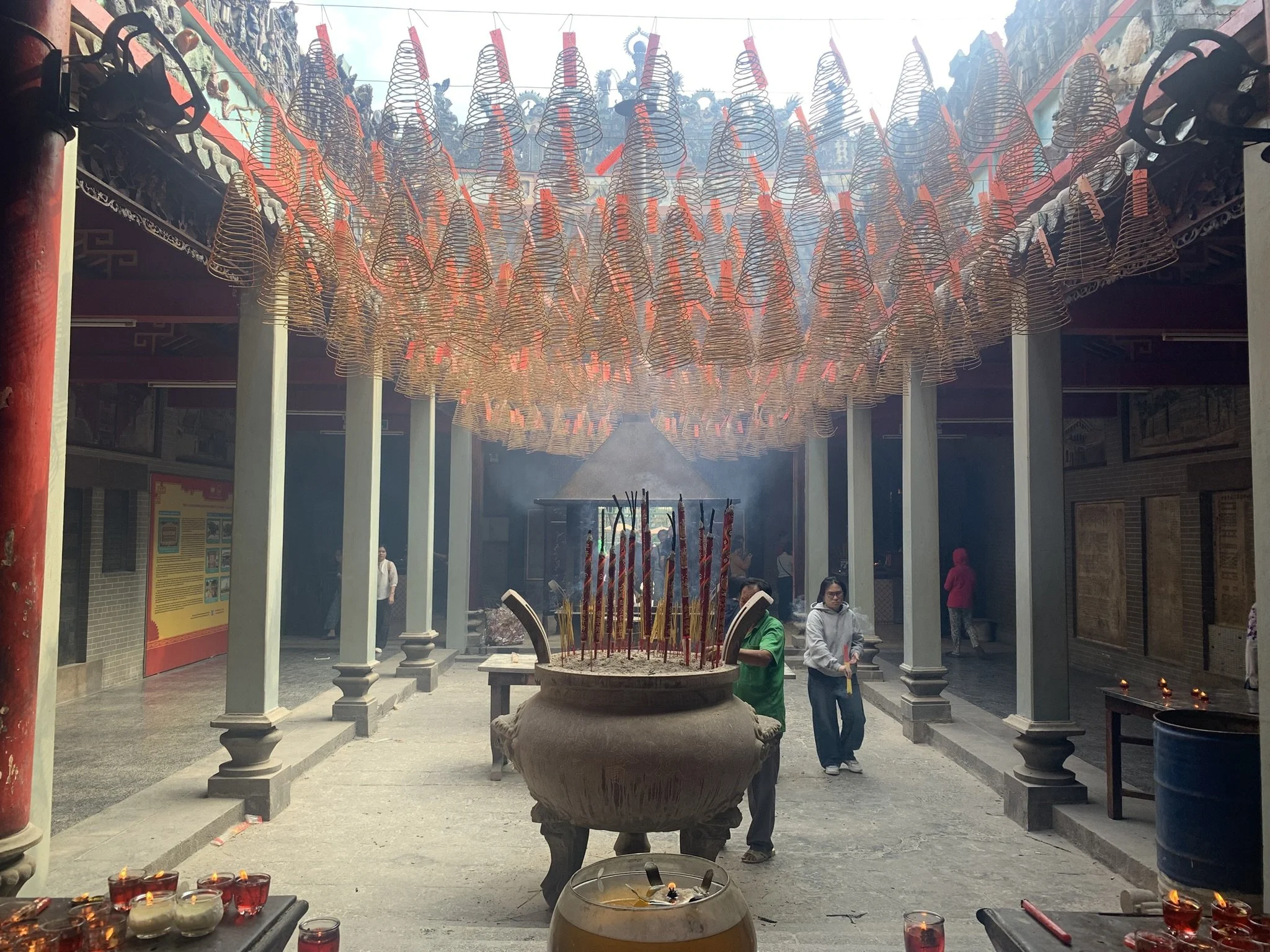
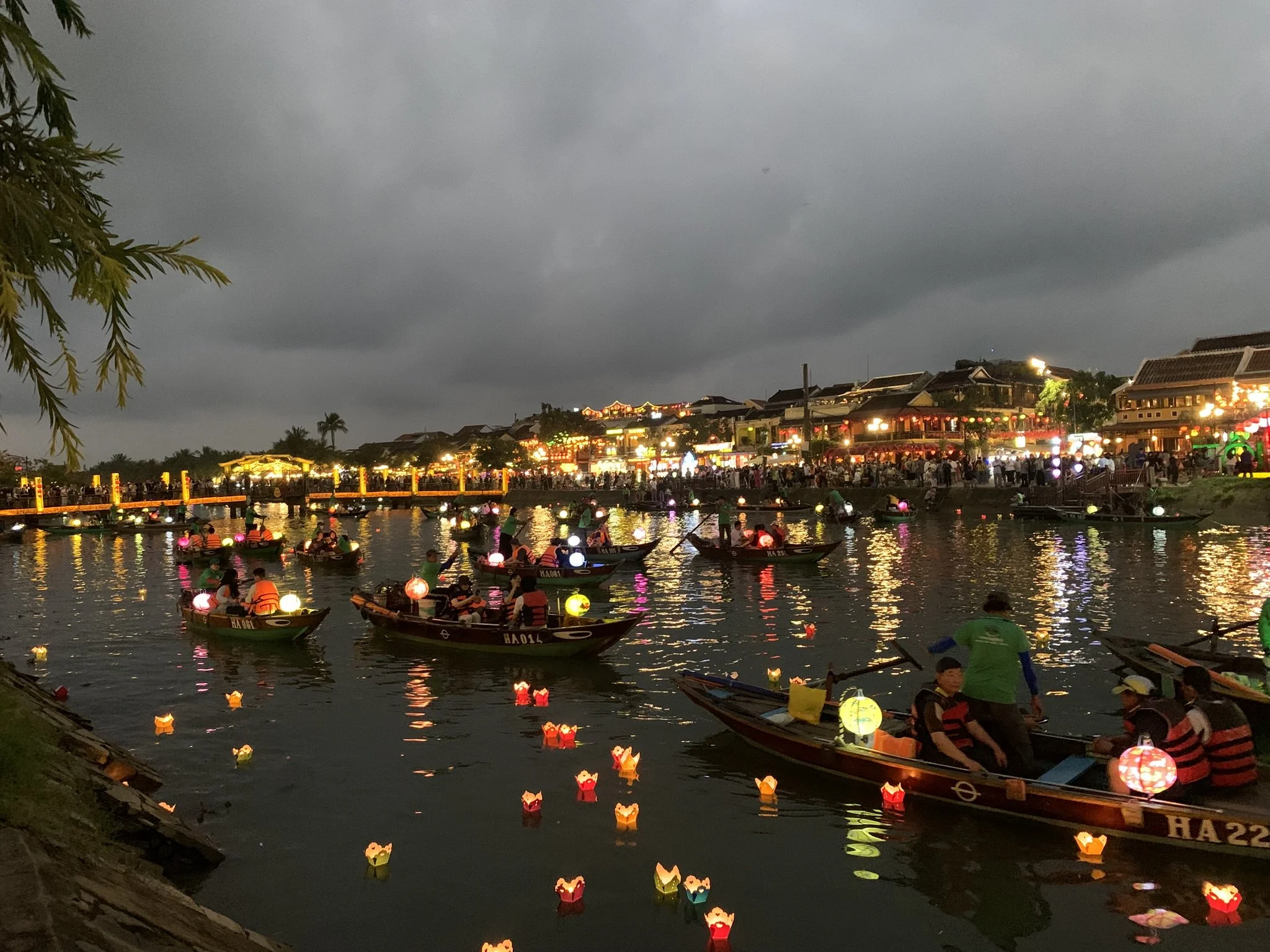
A highly engaging – and tightly packed – program awaited me in Hanoi, where Ngô Quang Nam, who had studied in Prague between 1969 and 1973, introduced me to the local art and cultural scene with great dedication. He arranged meetings with several artists from the state-supported art world and accompanied me to private studios and the local art academy, where I had the opportunity to speak with young students in the lacquer workshop about traditional Vietnamese lacquer painting. I also used the trip to visit as many culturally significant places as possible. In addition to numerous temple complexes and markets, these included, in Ho Chi Minh City, the impressive 1960s architecture of the Independence Palace and a secret weapon cellar hidden inside a residential building; in Da Nang, the Museum of Cham Sculpture, whose visual culture is shaped by matriarchal structures; and finally, in Hanoi, many state institutions, an excursion to Ninh Binh, and a day trip to the UNESCO-listed old town of Hoi An – plus a short moped ride, which was more than enough for me...
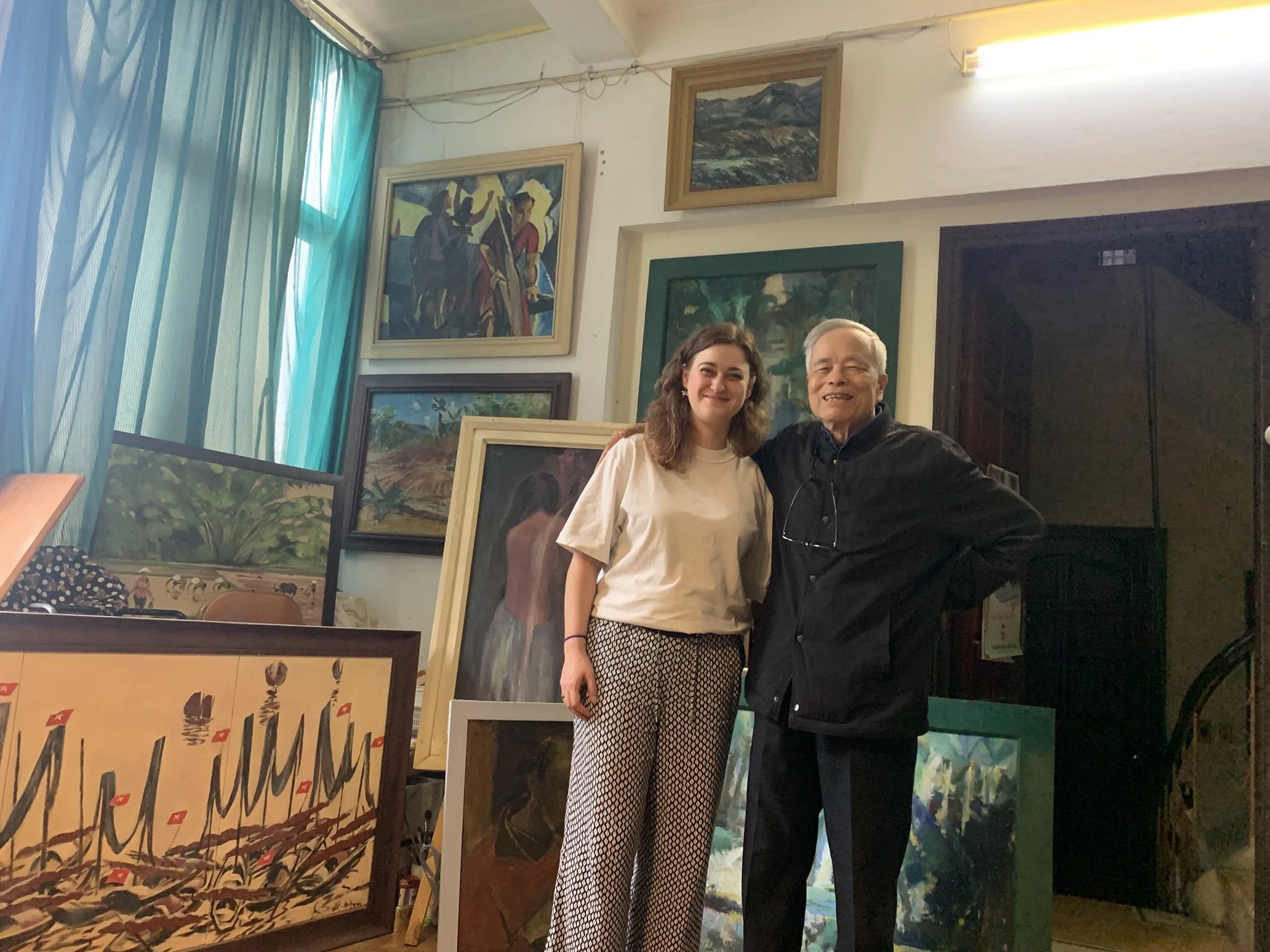
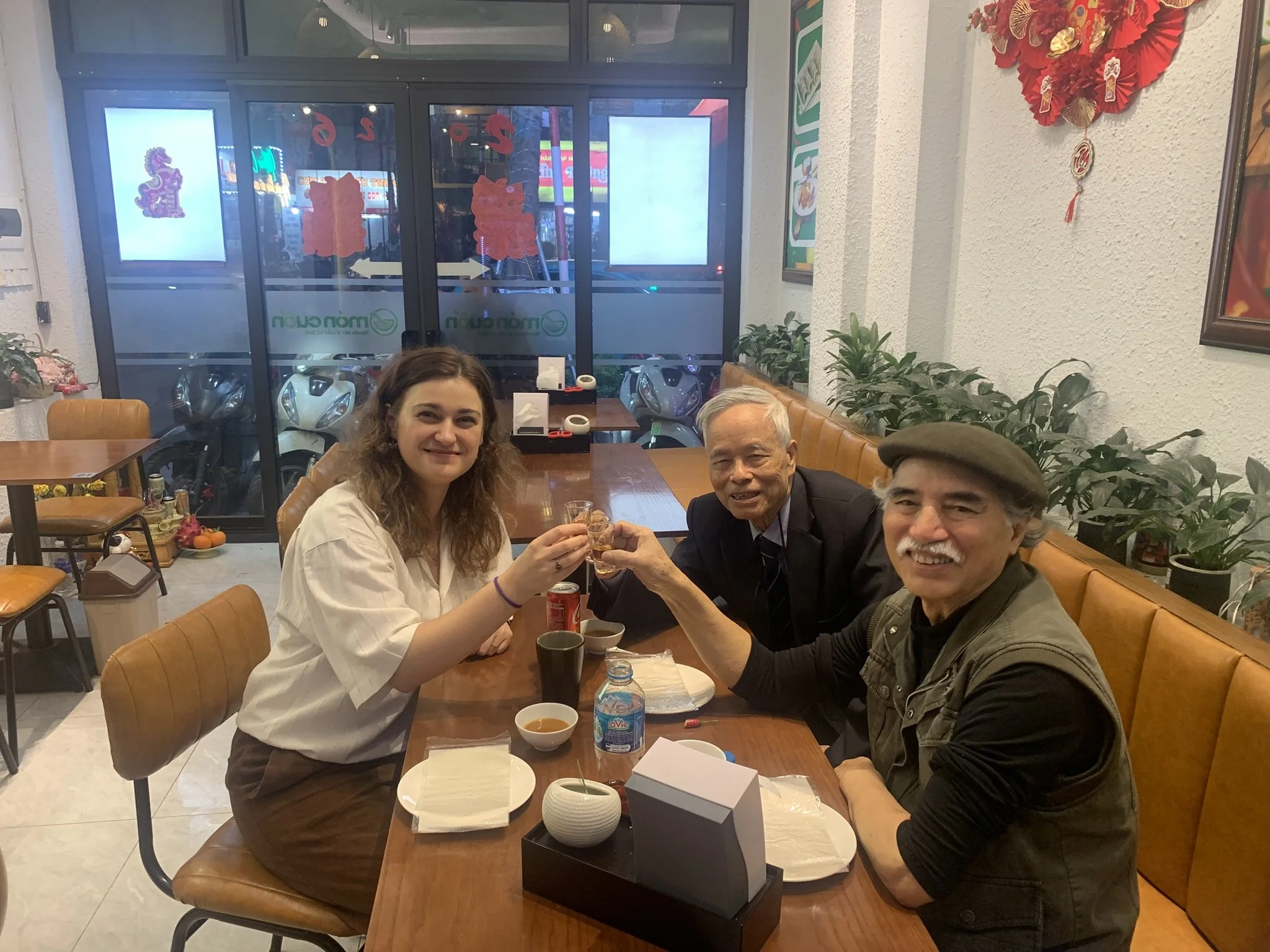
Anna-Marie Kroupová with artist Ngô Quang Nam in his studio in Hanoi, Vietnam.
Cultural Diplomacy Beyond Hard Power
While I was moving between interviews, cities, and temples, the geopolitical situation continued to escalate, suddenly making my originally planned return flight via Dubai impossible. I therefore had to extend my trip at short notice by almost a week and eventually make my way home via Singapore and Istanbul. This situation also called into question the perspective from which I approached my own research: What does it mean to study historical forms of cultural diplomacy and solidarity today, at a time when global relations are once again increasingly shaped by projections of military power?
I found one possible answer in the interviews themselves. In contrast to military power, it became very clear that personal relationships and cultural connections leave positive traces over the long term – traces that are sometimes only waiting to be reactivated. I would therefore like to express my sincere gratitude to Vũ Hà Đinh, Ngô Quang Nam, Nguyễn Hồng Nam, and Hoàng Tuyết Hạnh for their openness, time, and generosity. In very different ways, they all continue to lead what one might call an “artistic life” to this day.